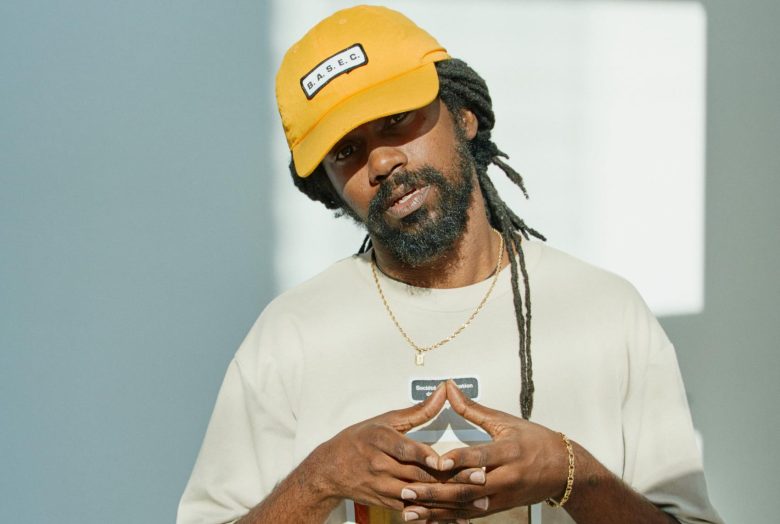
Runkus… Jamaica shaped you, but the world is claiming you. Do you ever feel torn between belonging to your island and belonging to something much larger?
Runkus: There are many ways to answer that. One of the main feelings or things people should do is that my music heavily coincides or is wrapped up with my faith in Rastafari so I like to acknowledge myself as in three parts: yes, I’m a Jamaican, but Jamaica is attached to the world. Jamaica is influenced by the world, and the world is influenced by Jamaica.
There’s also my Rastafarian, which is my spirituality point of view, so I also have a spiritual point of view. I don’t necessarily see myself as Jamaican. And then there’s the musical point of view. So that being said, no, I don’t feel torn because I never only try to speak to one set of people, meaning I never only try to speak to my nation.
I think the greatest thing you can do as a creative is to appeal to people’s soul, because everyone is going through the same struggles. It’s not necessarily the same views or the exact same scenario but everyone knows what pain feels like, joy, sadness, frustration, anger, betrayal. So I try to appeal to those human traits. So, just to simplify, I look at myself like a spiritual being going through a human experience, and from that perspective, the conversation becomes more broader.
If a 15-year-old in Kingston is listening to you right now trying to find their voice – what do you wish someone had told you at that age?
Runkus: Be yourself and do as much as your spirit and heart want and require.
Rastafari is not just your religion – it lives in your music, your words, your choices. In your darkest moment, what did that faith actually look like in practice?
Runkus: Growing up in Rastafari, through my father, I wanted to have that close-up proximity experience. It’s really because it’s a way of life. That’s why I used the word spirituality. It teaches you self-sufficiency, self-reliance, and self-belief, as well as about the struggles of my people collectively, black people all over the world, therefore people at large.
The simplicity of life is to be experienced, and actually we as human beings complicate life. Life is actually simple.
Growing up as the son of a legend, how did you find your own musical identity without feeling overshadowed by your father’s legacy, and how has that relationship shaped the artist you have become?
Runkus: Well, overshadowed is not the word I would use. I don’t feel overshadowed. I feel a sense of honor, duty, strength and, to be honest, great inspiration. Having that kind of introduction to life and to music – from my father’s perspective, but also from the musician’s perspective – it almost feels like a cheat code. My dad is one of the greatest, and I have to be one of the greatest.
Your music sits at the intersection of Rastafari spirituality and modern sonic experimentation. How do you keep that spiritual core intact when the world around you is constantly changing?
Runkus: Well, the world has always been changing, ever since I was a child, so change is not new to me. There is a saying that goes: “The only constant in life is change”, which is true. I would say because the things in life are always changing we have to either adapt to change or, someone said – adapt or die. It’s genuinely true.
Adaptability has to do with proper things. Because of my faith, the things that adapt are those of the world. I don’t know how to say this any different, but I’ll try to say it the best way I can. The best way to let things adapt is to let the world adapt. But Earth is a truth, and Earth does not change, meaning we will always breathe oxygen and let off carbon dioxide, the sun will always rise. There are some universal laws that will never change that are of the Earth and Rastafari ideal is those laws.
Yes, we try to live simply on Earth, but we have to adapt to the world. 10 or 20 years ago there wasn’t Wi-Fi, and now there is Wi-Fi. The way we adapt is to read scriptures or books online, for example. The things that change are such superficial worldly things. I don’t feel affected by change. I don’t feel pressured by it. I feel that my faith helped me to simplify life. To put it more short, my faith helped me to stay present in the Earth, while adapting in the world.
IN:SIDE was born from lockdown and isolation. What did silence and stillness teach about yourself that the noise of the music industry never could?
Runkus: It’s so funny because a lot of these questions have to do with Rastafari, because stillness has always been a part of my day to day. When you’re a child you don’t really care what’s stillness, you’re always on the go. Growing into my adult life and choosing Rastafari and Rastafari choosing me means a lot of stillness in the sense of just not being reactive and trying to be more productive.
That being said, when isolation happened I was okay being by myself and being with my family and not having to go anywhere. That was already part of my isolation. We self-isolated. Isolation was not a big thing. It was more like the propaganda and the actual illness and all these things going on around us.
It was not necessarily like the isolation was the big problem. It helped me to double down on time and capitalize time. It allowed me to make a body of work that can reflect the times. Nina Simone is one of my favorite musicians and she says: “An artist’s job is to reflect the times.”
That stillness that I put in practice helped me to reflect and document that time.
What is the simplest thing that makes you genuinely happy – something nobody would expect?
Runkus: Movies, a great movie! I like movies, I’m a cinephile. It doesn’t have to be popular people, popular directors, just a great movie, great plot, great cinematography. People think I don’t choose great movies. That’s because I watch a lot of movies. Sometimes when I’m naming movies I’m not naming the best ones, just the ones that I watch which is something different if that makes any sense.
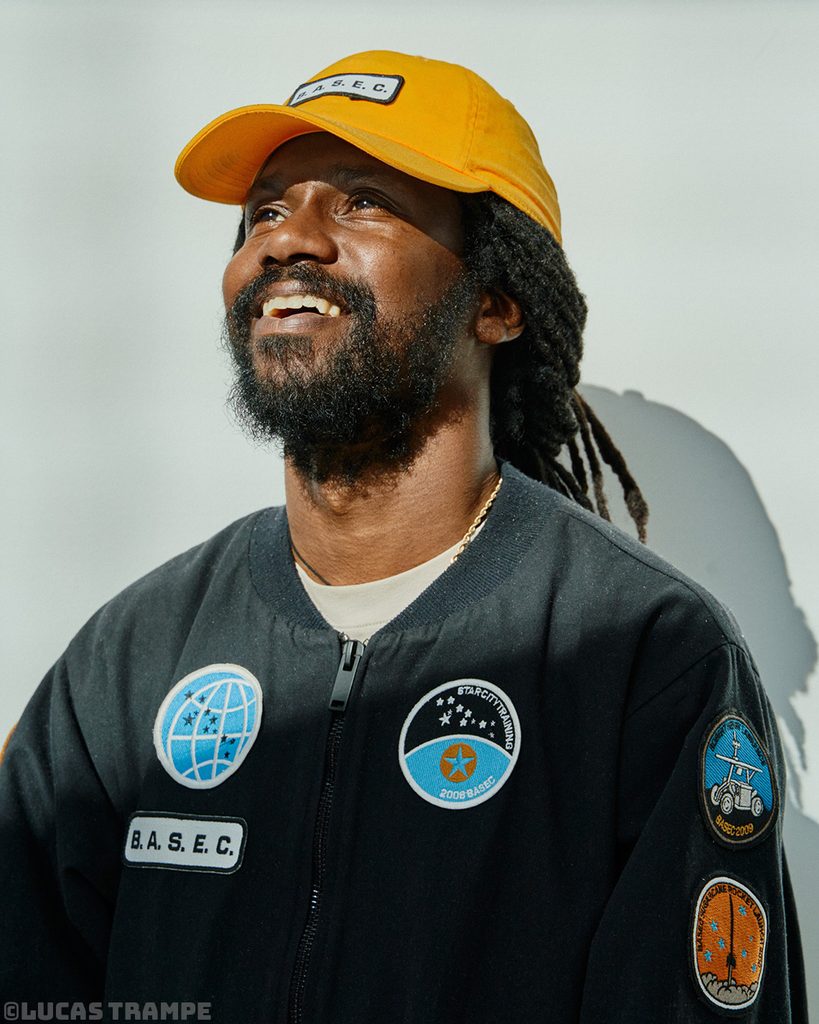
SUPERNOVA feels like a rebirth. When you look back at the trilogy – MOVE:IN, IN:SIDE, OUT:SIDE, and now this – what version of yourself do you see in each chapter, and which one surprised you the most?
Runkus: So I like to mark music and time. That being said, when I look at certain aspects of my life like I can about it like a movie and I know what time that was – just because of what I was wearing, what I was singing. It almost feels like a different person within me.
It’s a hard question, because I think in the moment I know but when I moved on it’s like “what do I know?”
Each record had something different that was representing me. For MOVE:IN it was reggae music and trying to push the live narrative in the youth because I was very young. I was touring about reggae and it was a big thing for me. For IN:SIDE it was reflecting the times during Covid. For OUT:SIDE it was about protecting yourself while you’re outside because I lost a lot of my friends to gun violence in Jamaica. I look at it as a spiritual situation, as a spiritual outlet.
So MOVE:IN was telling people to move into themselves and practice the stillness that we were talking about. IN:SIDE was about what are the feelings that you’re feeling, what are the things that you are facing. And OUT:SIDE was when you’re coming outside to protect yourself because you still have physical dangers, not just dangers from yourself but dangers from others.
Now this new rebirth, as you put it, I think people have to wait for until the third one for me to explain it. But the first one, “Supernova”, is exactly what you call it – a rebirth.
What is the one thing that still scares you as a human being?
Runkus: Human beings themselves!
When everything is said and done, not the albums, not the awards, what kind of man do you want the people closest to you to say you were?
Runkus: I wanted to be the greatest in the world, but of all things I wanted them to say is I was a man of my word who never gave up.
Imagine this interview is a letter, and everyone reading it is holding it in their hands right now. What message do you leave them with?
Runkus: Hi! My name is Runkus, I am froms Jamaica. I wrote some songs, made some music and now I’m speaking to a very great journalist from Romania. I never knew that would happen to me. If that can happen to me, anything can happen to you. So never give up and always, always, always follow your spirit. Jah love yuh!